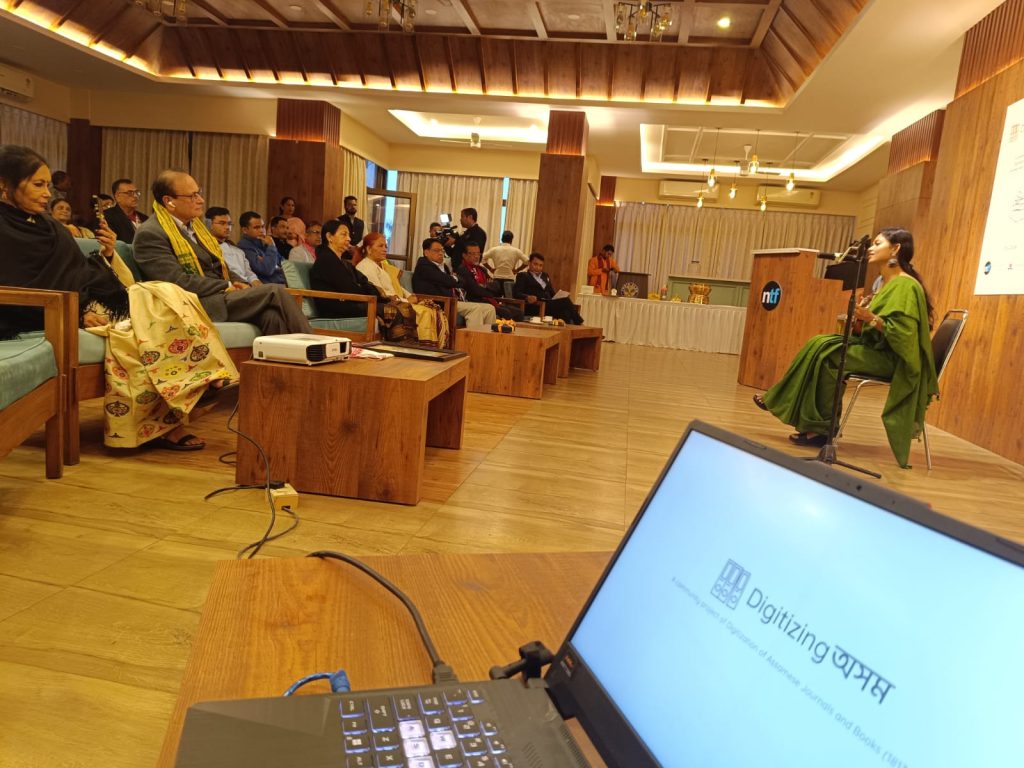
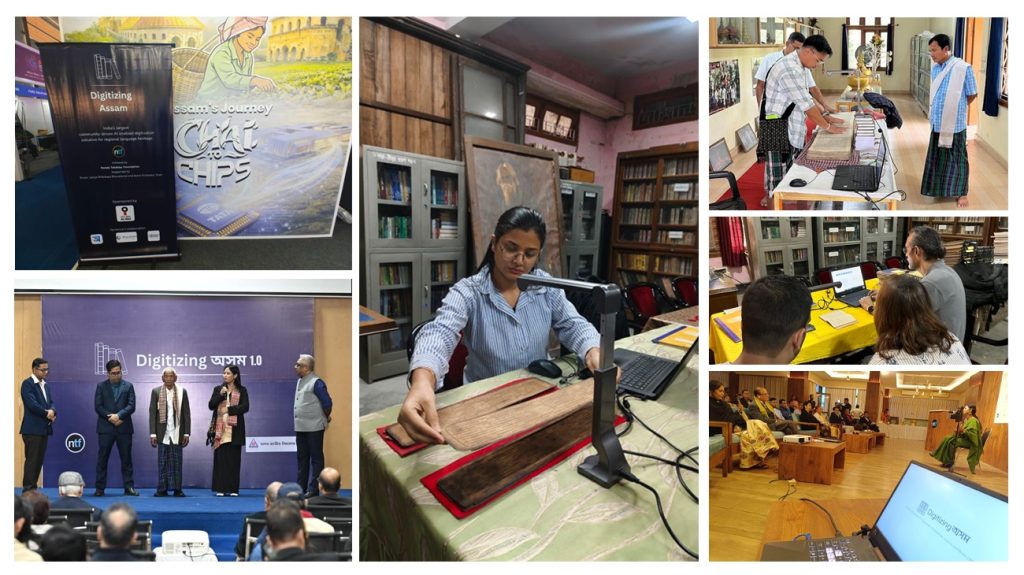
The Nanda Talukdar Foundation is a not-for-profit initiative dedicated to the preservation, digitisation, and public accessibility of Assam's intellectual and cultural heritage. Built on a community-driven framework, it works at the intersection of archival science, technology, and cultural documentation — enabling institutions and individuals to safeguard knowledge resources while making them accessible to a wider audience.
Today the Nanda Talukdar Foundation has emerged a focal point of pioneering contemporary social history, advocacy as well as intervention and their area of activities is spread both horizontally and vertically first in Assam and then slowly in other parts of the North East India.
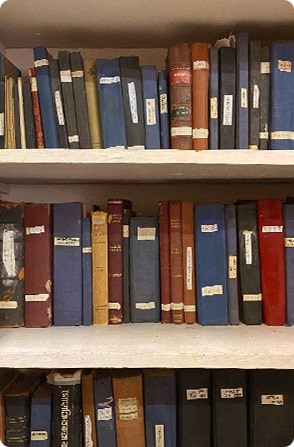
The Foundation was formally established on 22 November 1999, emerging from the personal library and intellectual legacy of Late Nanda Talukdar. What began as a private collection of books, manuscripts, and literary material gradually took institutional shape, leading to the formation of a registered society under the Societies Registration Act.
Its founding mandate was clear: preserve old Assamese literature, collect rare materials, and build a knowledge platform for scholars, students, and the public. That foundational archive is now the seed of a much larger, structured archival movement.
To build a comprehensive, accessible, and future-ready digital knowledge ecosystem that preserves the civilisational memory of Assam and the Northeast.
- Systematically digitise rare and endangered knowledge resources
- Document linguistic and cultural traditions at risk of disappearance
- Integrate archival content with emerging technologies, particularly AI
- Ensure preservation is matched by accessibility through searchable platforms
- Large-scale digitisation of books, journals, and archival materials
- Manuscript preservation through the Xaasipaat initiative
- Endangered language documentation with text, audio, and visual formats
- Thematic archiving: tea, cinema, socio-cultural records
- Technology integration enabling structured search and AI-powered access
The Foundation follows a structured governance model balancing institutional ownership with technical oversight:
NTF operates through decentralised execution and centralised technical control — field operations run through partner institutions and local teams, governed by standardised digitisation and metadata systems, and staffed by a hybrid workforce of professionals, interns, and volunteers. Integration with AI frameworks such as BharatGen strengthens the platform’s long-term scalability and reach.